

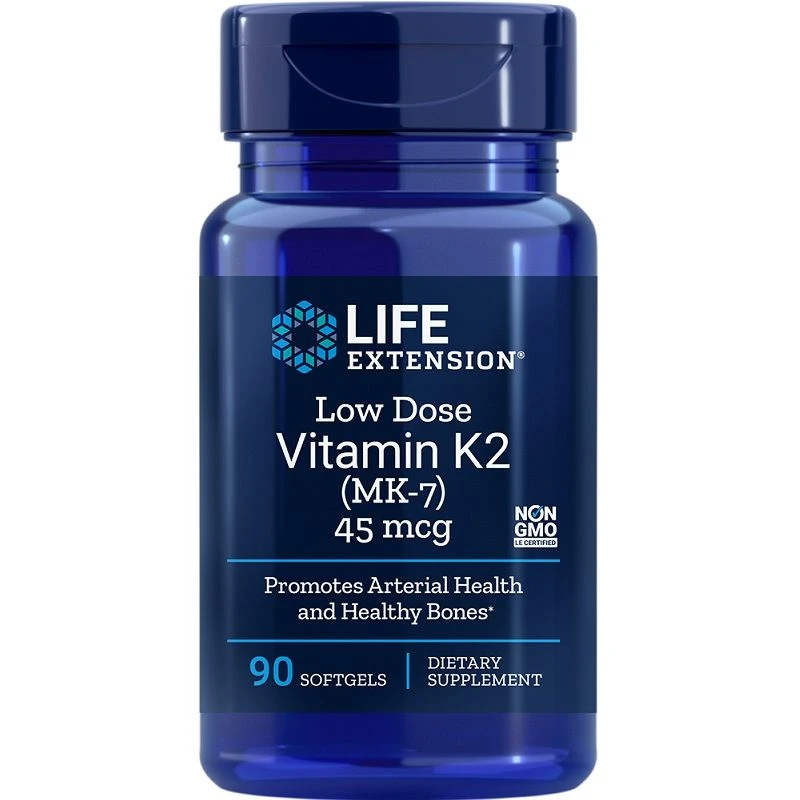
Life Extension Low Dose Vitamin K2 (MK-7) 45mcg Softgels 90
Original price was: $16.23.$11.36Current price is: $11.36.
- Safe Transactions, Always
- Hassle-Free Payments
- Multiple payment methods, safe and reliable
- Effortless solutions, excellent customer care.

Vitamin K found in Low-Dose Vitamin K2 can help contribute to counter calcification of the arteries thereby helping to maintain a healthy cardiovascular system. Vitamin K2 is also vital in transporting calcium from the bloodstream into the bone, thereby helping to maintain normal bone density.
Why it Works: Calcification of the arteries can be a natural consequence of the aging process. Luckily, Vitamin K can contribute to counter this phenomenon. Without adequate vitamin K levels, calcium in the blood can bind to the arterial wall resulting in calcification [6,7]. As people age, even a minor deficiency of vitamin K can pose risks to the vascular system. An abundance of clinical data also reveals that vitamin K plays a role in maintaining normal and healthy bone density; Vitamin K helps this by facilitating the transport of calcium from the bloodstream into the bones [1-5]. Furthermore, Vitamin K also helps calcium-regulating proteins function better in the arteries. Inadequate levels of vitamin K can also result in increased circulating levels of undercarboxylated osteocalcin which is associated with an increased bone loss in postmenopausal women [8,9].
The Science Behind the Product: Human clinical studies report that vitamin K has an important role to maintain healthy bone density. This is done by facilitating the transport of calcium from the bloodstream into the bone [1-5]. Matrix Gla-protein (MGP) is a vitamin K-dependent protein and has to be carboxylated to work effectively. Insufficient amounts of vitamin K can result in inactive uncarboxylated MGP which can accumulate at sites of arterial calcification [10,11]. Since MGP can potentially inhibit arterial calcification, MGP plays a role in the aging cardiovascular system. Insufficient vitamin K in our body can lead the calcium in the blood to bind to the arterial wall resulting in calcification of the arteries [6,7]. Researchers in Rotterdam conducted a large clinical trial study on heart health, about vitamin K2. 4,800 study participants were enrolled in the seven-year-long study. Study participants who received the highest amount of vitamin K2 in their diet experienced better cardiovascular condition [12]. Animal studies report that proper intake of vitamin K can block the progress of further calcium accumulation. Furthermore, it was also shown to trigger up to 37% regression of preformed arterial calcification [13,14].
How to Use: Take one (1) softgel daily with food, or as recommended by a healthcare practitioner.
Be the first to review “Life Extension Low Dose Vitamin K2 (MK-7) 45mcg Softgels 90”
Related products

Vitamins & Supplements
Vitamins & Supplements


Vitamins & Supplements
Vitamins & Supplements
Vitamins & Supplements

Vitamins & Supplements

Vitamins & Supplements
Reviews
There are no reviews yet.